
SpaceCHI 2026 Keynote Speakers
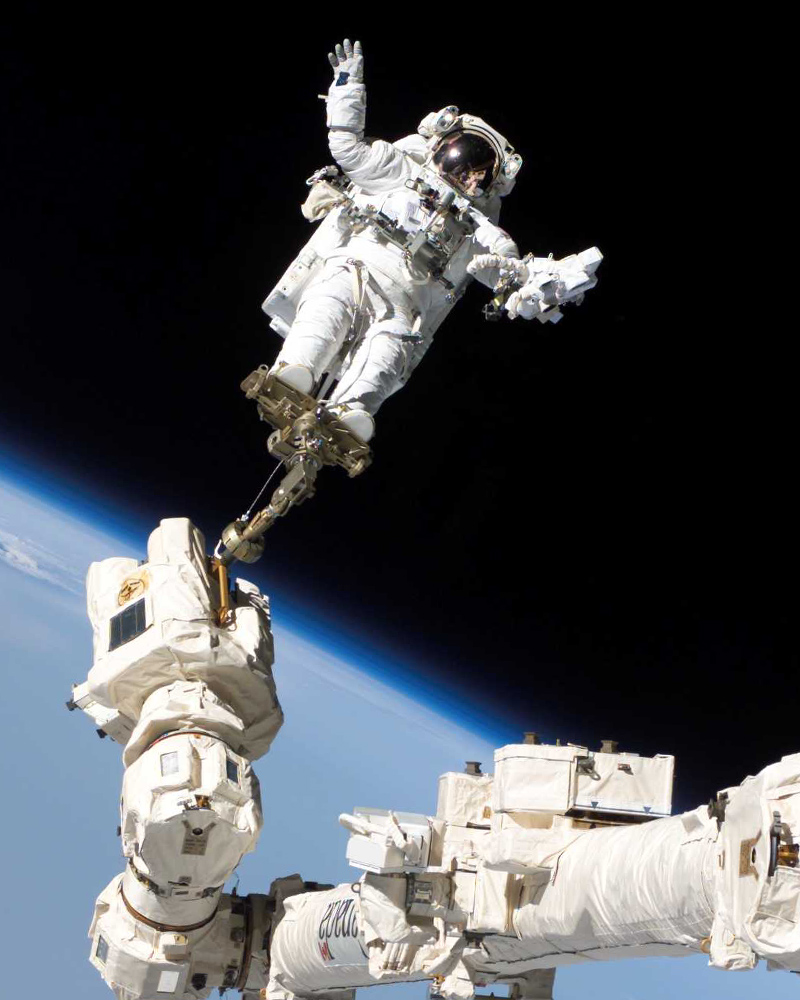
Stephen K. Robinson, Professor & retired astronaut, UC Davis
Before joining the faculty at the University of California, Davis in 2012, Stephen Robinson spent 37 years at NASA, where he worked as a technician, engineer, research scientist, pilot, and astronaut. Robinson is now a tenured professor in the UC Davis Mechanical and Aerospace Engineering Department and serves as the Director of the UC Davis Center for Space Exploration Research, where graduate and undergraduate students pursue research in human spaceflight, AI-enabled spacecraft autonomy, spacecraft design for human safety, human/autonomy/robotic integration, human performance, robotically-aided space agriculture, lunar surface operations, and CubeSat and UAV design.
During his 17 years as a NASA Astronaut, Dr. Robinson flew on four space shuttle missions, performed three spacewalks, visited the ISS twice, and trained in Star City, Russia. He has extensive research expertise in spacecraft systems, human/systems teaming, operational safety, space robotics, autonomous systems, experiment design, aerodynamics, and computational turbulence physics. Dr. Robinson’s engineering degrees are from UC Davis (double BS) and Stanford (MS & PhD), with additional academic research at Princeton and MIT.
Dr. Robinson is an active pilot, an artist, and a multi-instrument musician – he currently plays with the mostly-astronaut folk-music band Bandella, and the all-astronaut rock band Max Q.

Tina Panontin, Professor, SJSU
Dr. Tina Panontin is a Professor of Practice in the College of Engineering at San José State University, where she draws on extensive experience in complex systems engineering to teach, mentor, and support curriculum innovation and interdisciplinary collaboration. Her current research in human-systems engineering examines the challenges of spaceflight missions beyond low Earth orbit, developing decision-support systems, maintainability concepts, and automation strategies to strengthen the adaptive capacity of Earth-independent crews managing complex, hazardous operations.
Prior to joining SJSU, Dr. Panontin spent more than 34 years at NASA, including 18 years as Chief Engineer of Ames Research Center, where she served as the Center’s technical authority and contributed to major human spaceflight, science, and lunar initiatives across the Agency. She also led or contributed to more than 35 high-visibility mishap and failure investigations, developing novel methods to characterize evolving risk and integrate engineering information — work that resulted in a patent for Investigation Organizer, a software system that helps teams identify causal relationships and preserve evidential chains.
Dr. Panontin holds a BSME from Santa Clara University and an MS and PhD in Mechanical Engineering from Stanford University. Her contributions to engineering and aerospace have earned her more than 25 awards, including the NASA Medal for Exceptional Achievement, the NASA Medal for Outstanding Leadership, and the Astronauts’ Personal Achievement Award (Silver Snoopy).
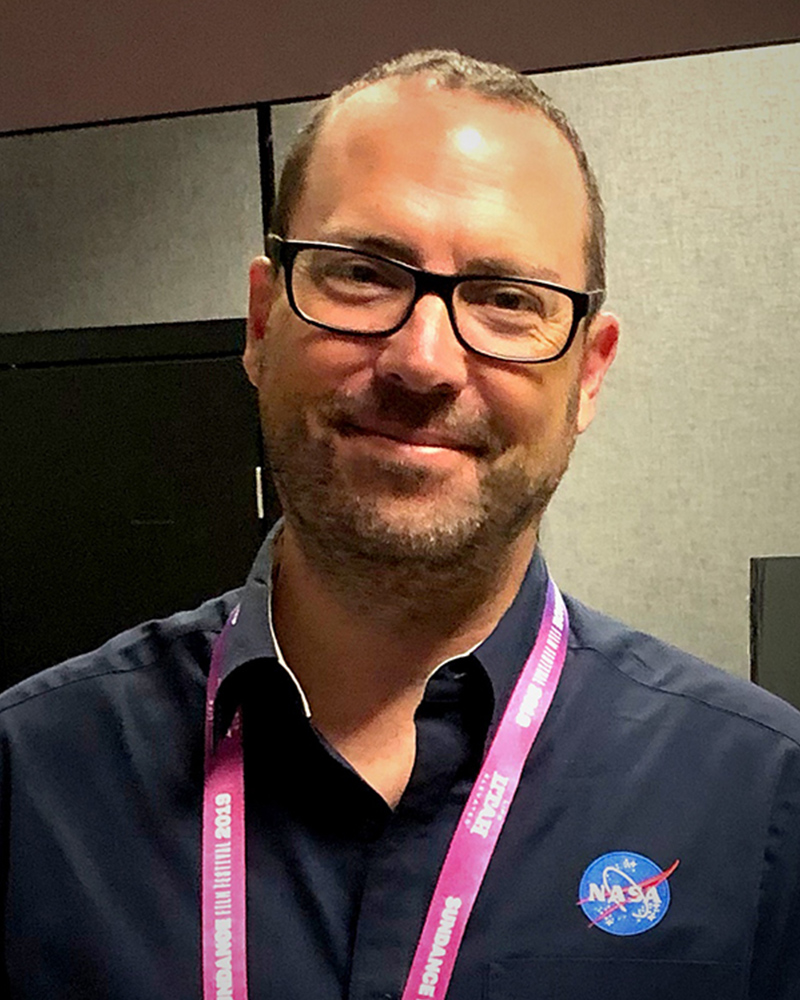
Ben Feist is a Software Engineer at NASA’s Johnson Space Center, contracted through Amentum/JETS2. He serves as Lead Developer and Product Owner on the EVA Mission System Software (EMSS) team, supporting human spaceflight operations for the International Space Station and Artemis programs.
Ben’s recent work includes CODA, an internal NASA application that temporally consolidates mission, training, and testing data into an exploratory web-based platform used by flight controllers to re-live and analyze moments on the International Space Station and Orion spacecraft; AEGIS, the Artemis Extravehicular Activity Geographical Information System, which integrates Science Traceability Matrix objectives with spatial maps to support Artemis EVA planning; Talky-Bot, which provides real-time transcription, translation, and on-demand playback of ISS and Orion space-to-ground voice loops; and Astromaterials 3D, which uses advanced imaging and 3D modeling to digitally preserve and share high-resolution interactive models of lunar and meteorite samples.
Before beginning his work at NASA’s Johnson Space Center in 2017, he led technology teams in the creative industry and created Apollo in Real Time, an award-winning digital restoration of Apollo mission archives. His work has received numerous honors, including three Emmy Awards for Apollo 11 (IMAX), the JSC Exceptional Software Award, the NASA Major Space Act Award, the Exploration Museum’s Leif Erikson Exploration History Award, and the Society of Historians in the Federal Government’s Excellence in New Media Award.

Grace Gao is an associate professor in the Department of Aeronautics and Astronautics at Stanford University, with a courtesy appointment in the Electrical Engineering Department. She leads the Navigation and Autonomous Vehicles Laboratory (NAV Lab) and serves as co-director of the Stanford AI Safety Center and co-lead of the Stanford SystemX Robotics area. Her research focuses on robust and secure perception, localization, and navigation, with applications in crewed and uncrewed aerial vehicles, autonomous cars, humanoid robots, and space robotics.
Prof. Gao has won numerous awards, including the NSF CAREER Award, the Institute of Navigation Early Achievement Award, the RTCA William E. Jackson Award, and the Inspiring Early Academic Career Award from Stanford University. In addition to her research achievements, she has received significant recognition for her teaching and advising, including the AIAA Stanford Chapter Excellence in Advising Award and the Excellence in Teaching Award.